


Fuller HairHair that doesn't break
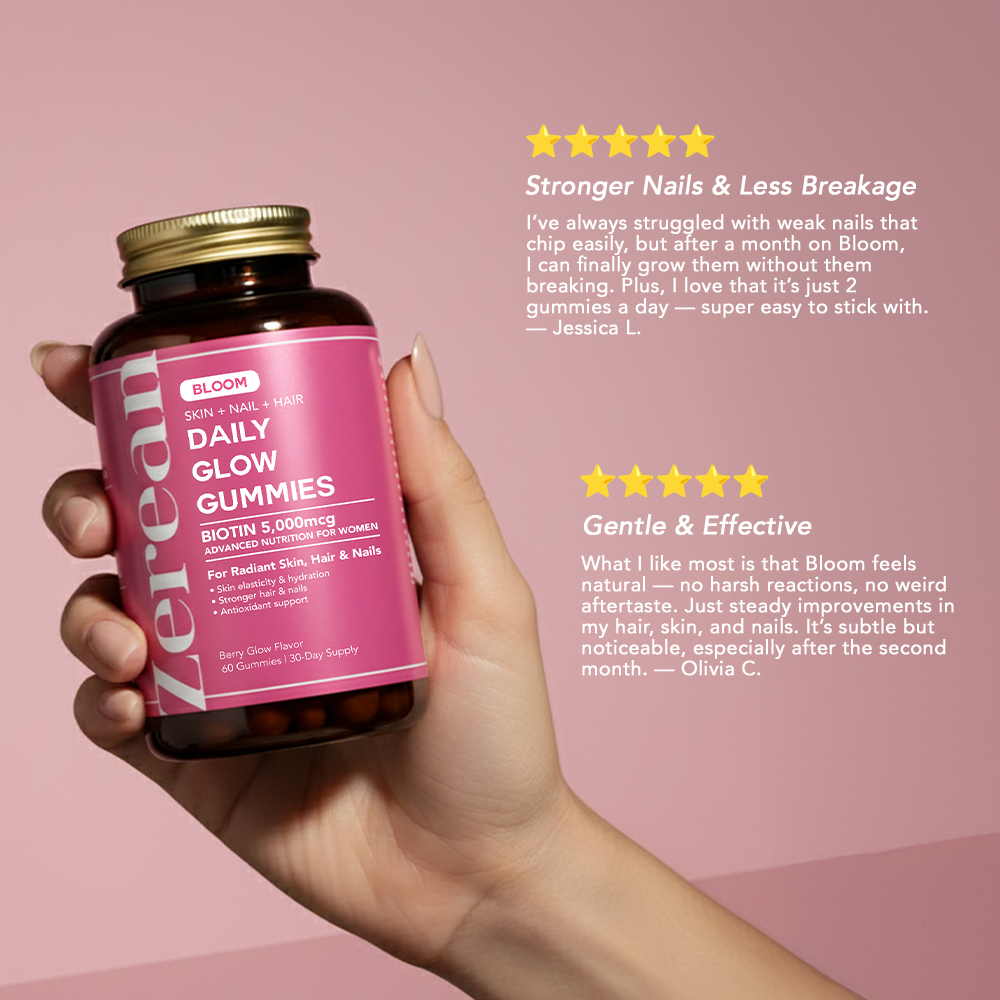
5,000mcg Biotin — therapeutic-dose support for keratin and hair fullness.
Spend $80 more to get FREE shipping!

📦 Ships within 1–2 business days
🌍Tracked worldwide
🔒 Secure checkout
⭐ Trusted by 12,500+
60 Gummies | 1 Month Supply
Made with USA Standard, GMP Compliant
The only beauty gummy with functional mushrooms.
Built around the gut-skin axis — where strong hair and skin actually start.
For hair thinning, brittle nails, and skin that's lost its bounce.
Two gummies replaces 4. Stop juggling biotin, collagen, multivitamin, and antioxidants.
Couldn't load pickup availability




THE ONLY BEAUTY GUMMY WITH FUNCTIONAL MUSHROOMS
Therapeutic-dose Biotin. Vitamins C + E. Reishi and Lion's Mane. One daily routine.
5,000mcg Biotin — therapeutic-dose support for keratin and hair fullness.
Vitamins C + E — antioxidants designed to support skin from oxidative stress.
Biotin-led formula designed to support keratin and nail resilience.
Reishi + Lion's Mane — functional mushrooms most biotin gummies skip.
5,000mcg Biotin — therapeutic-dose support for keratin and hair fullness.
Vitamins C + E — antioxidants designed to support skin from oxidative stress.
Biotin-led formula designed to support keratin and nail resilience.
Reishi + Lion's Mane — functional mushrooms most biotin gummies skip.
12,500+ customers across the Zerean range. 4.74 stars. Bloom is built on the same standard.
 BEFORE
 AFTER
AFTER
Dark circles, dull skin, deep lines—I looked exhausted even after a full night's sleep. I honestly didn't think a supplement could make a real difference. After 3 months on Bloom, my under-eye bags have faded, my skin has this glow I haven't seen in years, and even my fine lines look softer. My husband asked if I'd gotten "work done." Nope—just one gummy a day. My hair is thicker too, which I wasn't even expecting.
 BEFORE
 AFTER
AFTER
For two years, I watched my hair fall out in clumps every time I washed it. I tried expensive shampoos, biotin alone, even considered prescription options. After 8 weeks on Bloom, I noticed way less hair on my brush and in the drain. Now at 4 months, my hairdresser asked what I'm doing differently—she said my hair looks thicker and healthier than it has in years. My nails have also stopped breaking, which is a bonus I didn't expect.
 BEFORE
 AFTER
AFTER
I didn't recognize my own skin anymore—dry, rough texture, fine lines everywhere. Menopause made me look worn out no matter how much water I drank or cream I applied. After just 4 weeks on Bloom, my skin feels smoother, more hydrated, and has this healthy glow I thought was gone for good. Even my hair looks fuller and has more life to it. My sister asked what skincare I switched to—she couldn't believe it was just a gummy. I finally feel like myself again.


Inside the formula
Five ingredients chosen to support stronger nails, fuller hair, and healthier skin — starting from the gut, where hair and skin really begin.
The hair, skin, and nail vitamin — at a real dose. Supports the keratin your body uses to build all three.
Functional mushroom supporting the gut-skin axis — the connection between gut health and how skin behaves.
Adaptogenic mushroom supporting the gut-skin axis — and the conditions for hair fullness over time.

Supports collagen — the protein that keeps skin elastic and hair strong.
Fat-soluble antioxidant that supports skin from oxidative stress.


WHAT TO EXPECT

The mushroom blend and therapeutic Biotin start supporting the gut-skin axis — where strong hair, skin, and nails actually start. Internal work, no visible signal yet.
Nails are the fastest place you'll see Bloom working — typically growing in stronger and breaking less around the four-week mark.
By month three, skin elasticity and hair fullness join the party. Designed to support healthier hair, skin, and nails when used consistently — visible hair changes typically take 4–6 months to fully land.
No. Bloom pairs therapeutic-dose Biotin (5,000mcg) with two functional mushrooms — Reishi and Lion's Mane — and dual antioxidants (Vitamins C and E). One gummy replaces what most beauty routines need three or four separate supplements to do.
Most customers notice stronger nails first, around 4–8 weeks. Skin improvements typically follow at 8–12 weeks, and visible hair fullness takes longer — usually 4–6 months. Take it daily and give it a 3-month course minimum to feel the full effect.
That's the point. Bloom combines therapeutic-dose Biotin with the antioxidants and functional mushrooms most beauty stacks miss. Most customers replace three or four separate supplements with one daily routine — and stop juggling.
Bloom is for any adult experiencing hair thinning, brittle nails, or skin changes — regardless of gender or life stage. The formula is built around the gut-skin axis, which works the same way for men and women. Many women in perimenopause and menopause use it alongside Balance, but it's not limited to them.
Berry — naturally flavored, low-sugar. No chalky aftertaste. The point of choosing gummies over pills is that you'll actually want to take them every day.
Bloom is made from food-grade ingredients and designed to be gentle. Most customers experience no side effects. If you're pregnant, breastfeeding, or on prescription medication, please check with your doctor before starting any new supplement.
