


Zerean® Luna
Zerean® Luna
60 Gummies | 1 Month Supply
Made with USA Standard, GMP Compliant
A Complete Nighttime Ritual for the Menopause Years
7 ingredients. 1 nightly gummy ritual.
For the wind-down hour before bed
Whole-body calm—magnesium, GABA, L-Theanine
Sugar-free. Vegan. Two gummies.
Couldn't load pickup availability


Ingredients studied at leading institutions


An Evening Ritual Built for the Menopause Years
Most nightly supplements hand you one ingredient and hope for the best.
Luna is different.
Seven ingredients — GABA, L-Theanine, magnesium, vitamin B6, lemon balm, valerian and passionflower — in two sugar-free gummies you take 30 minutes before bed.
No capsules to swallow. No powders to mix. Just a ritual you can actually keep.
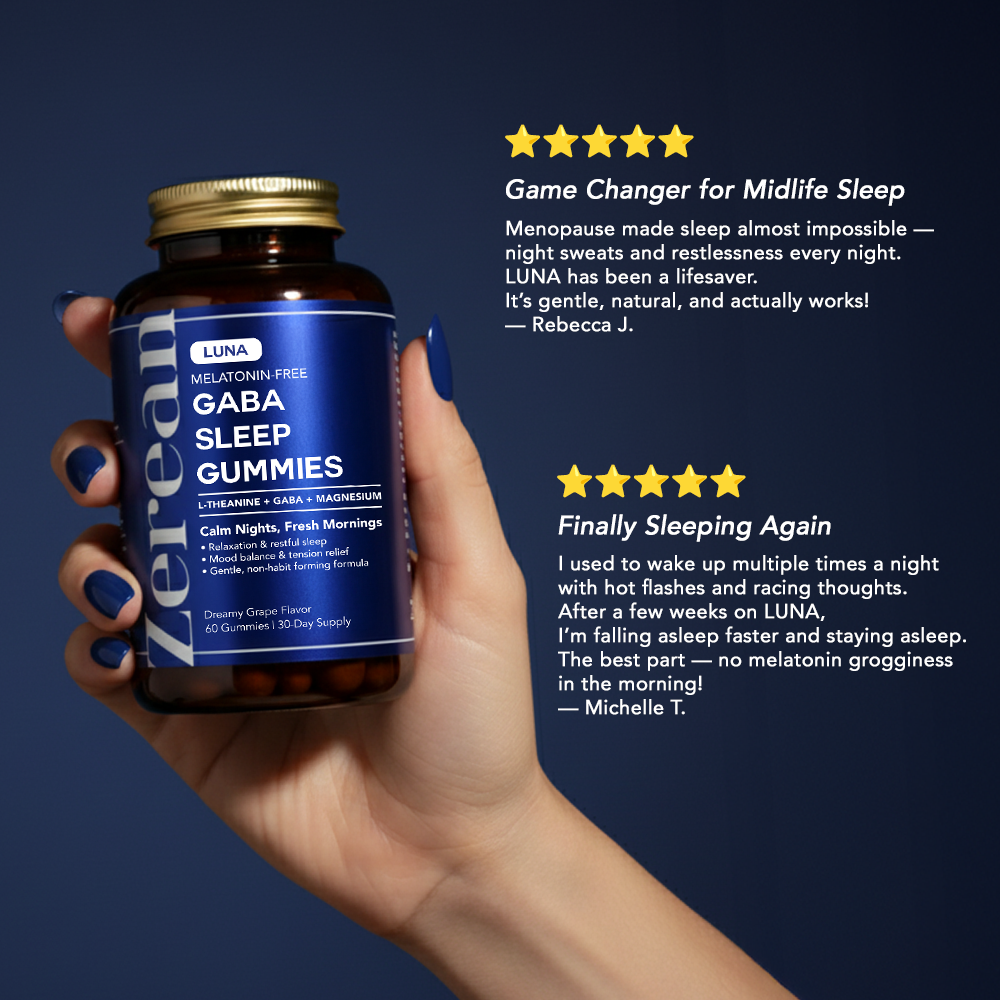
Women Who Made It Part of Their Evening


What The First Two Months Usually Look Like

What The First Two Months Usually Look Like
Nothing dramatic, and nothing overnight. Here is the honest arc our customers describe.
98%
Week 1 — the ritual starts to stick
97%
Weeks 2–4 — calmer evenings, easier wind-down
94%
Week 6+ — two gummies a night, no thinking about it
Real People, Real Routines

Why Seven Ingredients, Not One
Most nightly supplements give you a single ingredient. Luna gives you seven.
✓ GABA — 150mg per serving
✓ L-Theanine — the amino acid found in green tea
✓ Magnesium + Vitamin B6 — two everyday essentials
The upshot: one gummy jar instead of seven bottles on your nightstand.
The Calm Side of the Formula
Three of Luna’s seven ingredients are the ones people reach for in the evening:
✓ GABA — 150mg, the amount usually sold on its own
✓ L-Theanine — the green-tea amino acid
✓ Lemon Balm — a botanical traditionally taken at the end of the day
All three, in two gummies.
The Other Four Ingredients
The rest of the label, no filler:
✓ Vitamin B6 — an essential vitamin
✓ Magnesium — one of the most common everyday shortfalls
✓ Valerian + Passionflower — two botanicals traditionally taken in the evening
Seven ingredients. Sugar-free. Two gummies.
Not All Nighttime Gummies Are The Same
We did not copy what is already on the shelf. We built the label we wanted ourselves — seven ingredients in one sugar-free gummy.
| Luna | Others | |
|---|---|---|
| Seven Ingredients, Not One | ||
| Gummy, Not Capsule | ||
| Sugar-Free | ||
| Vegan & Non-GMO |
Your Questions Answered
What is actually in Luna?
What is actually in Luna?
Seven ingredients: GABA (150mg), L-Theanine, magnesium, vitamin B6, lemon balm, valerian and passionflower — in two sugar-free peach gummies. The full amounts are printed on the label.
How long should I give it?
How long should I give it?
Give it 4–6 weeks of consistent nightly use. Like most botanicals, it works as a routine rather than a one-off.
Is it really sugar-free?
Is it really sugar-free?
Yes — sugar-free, vegan and non-GMO, made in a GMP-compliant facility. Golden peach flavour, no refrigeration needed.
Can I take Luna every night?
Can I take Luna every night?
Yes — Luna is made for nightly use as part of a wind-down routine.
Who is Luna for?
Who is Luna for?
Anyone who wants one simple end-of-day gummy instead of a nightstand full of bottles. It is most popular with women in their 40s and 50s, though there is nothing in the formula specific to them.
Can I take Luna with other supplements or medications?
Can I take Luna with other supplements or medications?
Luna is made with food-grade ingredients. If you take prescription medication, are pregnant or breastfeeding, or have a medical condition, check with your doctor before starting.
How do I take Luna?
How do I take Luna?
Take 2 gummies 30 minutes before bed. For best results, use consistently as part of your nightly wind-down routine.